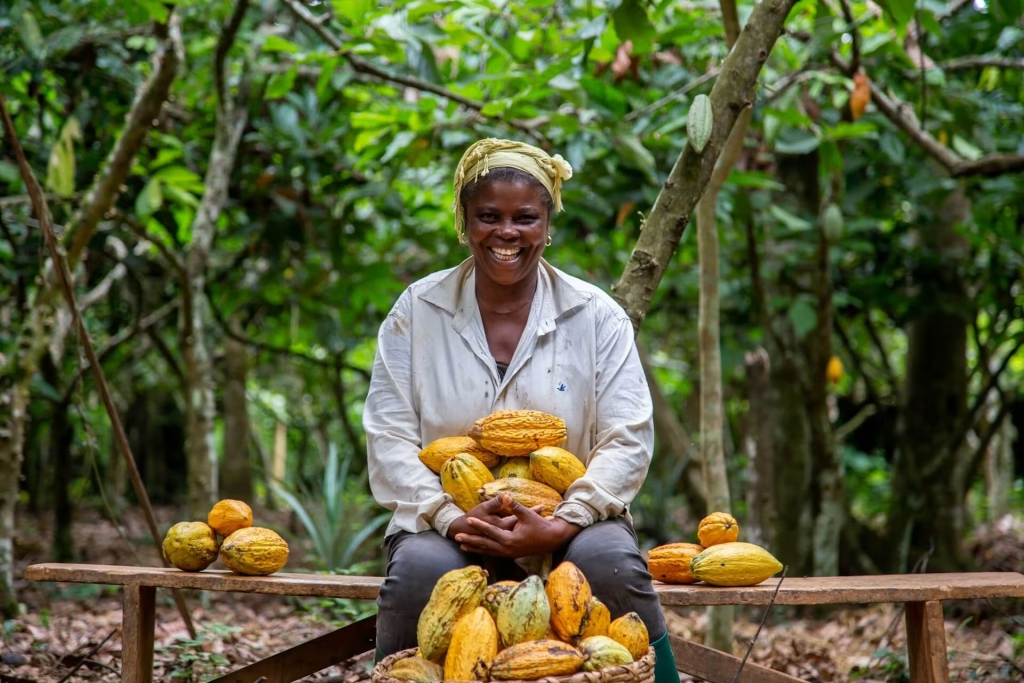
I have kept a small garden behind my house for most of my adult life. It has taught me more about people than any management course I have attended, and I have attended a great many.
Here is the first lesson. A garden left alone does not stay neutral. It does not simply pause and wait for you to come back. It fills — quickly and enthusiastically — with things you did not plant and do not want. Nobody sows weeds. They arrive because the ground was available.
The absence of deliberate cultivation is not neutrality. It is an invitation to whatever grows easiest.
A life works the same way. If you do not decide what you are becoming, you will still become something. The question was never whether the ground would be occupied. It was only ever whether you would have any say in what occupies it.
The four labours
When I speak to young managers I break the work into four parts, because four is a number people remember on a Monday morning.
Ploughing is the honest, unglamorous breaking of hard ground. It is admitting the thing you have been avoiding: the qualification you never finished, the conversation you keep postponing, the habit everyone but you can see. Ploughing hurts and produces nothing visible. It is still the reason anything else works.
Sowing is choosing what goes in. Most people are far more careless here than they would ever be with money. What you read, who you spend Saturday with, what you listen to on the drive to work — these are seeds, and you are planting them whether or not you meant to.
Weeding is continuous and thankless, and it is where most people stop. The weeds in a life are rarely dramatic. They are small entitlements, small excuses, the slow conviction that your circumstances explain you. They grow back. You pull them again.
Tending is the long patience — watering something that shows no sign of gratitude, for a season, and then another.
The gardener’s honest complaint
I know the objection, because I have made it myself. Some people are handed better soil. That is true. It has always been true, and no amount of encouragement from a man with a book makes it less true.
But I have watched people with excellent soil grow nothing at all, and people with very little produce a harvest that fed a family and then a village. The soil sets the difficulty. It does not set the outcome. What I refuse to accept — what this whole book of mine argues against — is that negative outcomes are a life sentence.
You are more powerful than you think. Not because I have said so, but because the evidence of ordinary people doing extraordinary things is sitting in every library, and because you have almost certainly done something already that a younger version of you would have called impossible.
Begin badly
If you take one thing from this, take this: start with one square metre. Not the whole plot. One habit, one conversation, one skill. Cultivate it properly for ninety days and look again.
The garden does not need you to be impressive. It needs you to turn up.